


 1-888-645-7920
- * Cruises *
- Australia/ New Zealand
- * Group Travel *
- Alaska
- Alicante
- Amsterdam
- Antigua
- Argostoli
- Athens
- Barcelona
- Bari
- Belfast
- Berlin
- Bologna
- Bruges
- Brussels
- Budapest
- Caribbean
- South America
- Chianti
- Cinque Terre
- Copenhagen
- Corfu
- Dubai
- Dublin
- Dubrovnik
- Edinburgh
- Egypt
- Ephesus
- Florence
- Genoa
- Helsinki
- Iceland
- India
- Interlaken
- Israel
- Istanbul
- Italy
- Katakolon
- Klaipeda
- Koper
- Kotor
- La Spezia
- Lake Como
- Liverpool
- Livorno
- London
- Lyon
- Madrid
- Milan
- Malaga
- Marseilles
- Monte Carlo
- Mykonos
- Naples
- Nice
- Normandy
- North America
- Palma de Mallorca
- Paris
- Prague
- Ravenna
- Rhodes
- Rome
- Salzburg
- Santorini
- Sicily
- Siena
- Sorrento
- Split
- St. Petersburg
- Stockholm
- Tallinn
- Toulon
- Tuscany
- Valencia
- Valletta
- Venice
- Vienna
- Zurich


10 Keys to Success for Rome Accessible Travel
By John Sage
Handicapped Accessible Travel to Rome – What are the most important items that you should focus on when planning handicapped accessible travel to Rome? You could spend endless hours trying to understand every aspect of accessibility at every location you are going to visit. Before you go into that much effort, be sure to concentrate on the Keys to a Successful Handicapped Trip to Roma Italy provided below.
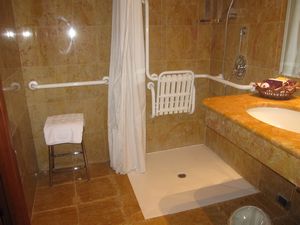
1. Rome Handicap Hotels for Electric Wheelchair Users – Because there are few accessible public transportation options (and accessible taxis are expensive), tourists using an electric wheelchair or a mobility scooter should stay in one of the wheelchair accessible hotels in the center of town. If you stay in the middle of town, the Pantheon, Trevi Fountain, Spanish Steps, the Vatican, the Capitoline Museums, Trajan’s Market,the Coliseum, and the Roman Forum are within a 3 km (2 mile) radius.
2. Rome Accessible Hotels for Manual Wheelchair Users – The center of town has cobblestones virtually everywhere, and they are of a more severe nature than many other European cities. Manual wheelchair users that have difficulty with cobblestones may want to stay in one of the flat, smooth neighborhoods slightly outside of the city center. Although you may need to take a taxi to get to the tourist attractions, you’ll have a far easier time getting to accessible restaurants and accessible shopping near the hotel.
3. Take an Accessible Guided Tour in Rome – An accessible walking tour in the city center is an excellent way to see some of the top attractions in Rome and get a history overview of the city. The accessible tours typically visit Campo de Fiori, Piazza Navona, the Pantheon, the Trevi Fountain, and the Spanish Steps.
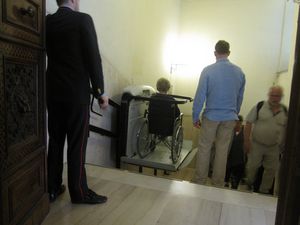
4. Don’t miss the Sistine Chapel, Vatican Museums, and St. Peter’s Basilica – I know this is completely obvious, but every now and then I talk to someone who is rushing through Rome and they pass on these sights. Vatican City contains some of the best Renaissance art and architecture in the world, and disabled visitors to the Vatican should take at least a half day to visit the 3 parts of the Vatican. A picture of the wheelchair lift to get to the Sistine Chapel is shown on the right.
5. Plan your daily itineraries to include wheelchair accessible restaurants – A visit to Rome is not entirely about ancient ruins and art…you also need to make time to experience the local culture. The food in Rome is magnificent. Make sure that your sightseeing schedule puts you near accessible restaurants at lunch and dinner time.
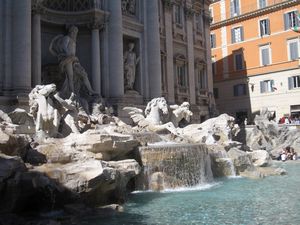
6. See the Trevi Fountain after dark – The Trevi Fountain is great during the day and even better at night. It’s always open so use your days to visit museums and churches that are closed in the evenings.
7. Plan a downhill route – Rome is hilly so manual wheelchair users and other Rome handicapped tourists will have a much more enjoyable trip by carefully planning their route. The tourist attractions can be strung together so that tourists can spend all day on flat ground or rolling downhill.
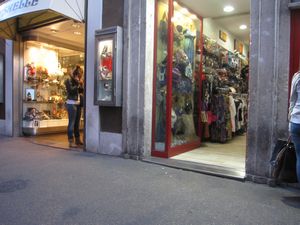
8. Make time for shopping in one of the accessible shopping neighborhoods – Many shops in Rome have a step or two at the entrance so you don’t want to spend a lot of time on your vacation searching for handicap accessible Rome shopping. Do the research beforehand so you can wear yourself out browsing the shopping racks rather than pushing up the street.
9. The 3 parts of Rome – Even if your stay in Rome is a short one, be sure to make time to visit tourist sights that cover the 3 main areas of interest: Ancient Rome, Renaissance Rome, and the Vatican. They can almost be divided geographically as well and a minimum of 3 days will be time well spent on your accessible Italian holiday.
10. See magnificent art in the church it was designed for – Most of the Renaissance Art that we see during our lifetime hangs on a wall in a museum. While in Rome, be sure to visit some of the churches and chapels that have housed the art since it was created centuries ago.
Want a worry-free, fully accessible vacation?
Check out our Rome accessible trip planning services
Read more:
Rome Accessible Travel – main page
Pros and Cons of Rome Disabled Access
10 Wheelchair Accessible Travel Tips for Rome Italy
10 Keys to Success for Rome Disabled Travel
Getting Around Rome with a Disability
Vatican Handicapped Access Review
Wheelchair Accessibility at the Colosseum
Handicapped Access at the Roman Forum
Civitavecchia Port Disabled Access Review
Best and Worst Aspects of Disabled Travel in Italy
Top 10 Experiences for Disabled Visitors to Italy
12 Wheelchair Travel Tips for Italy
Travel Insurance for Disabled Travelers
Rome Accessible Travel Packages
Accessible Walking and Driving Tours in Rome
Wheelchair Accessible Vatican Tour
Ancient Rome Accessible Tour
Accessible Guided Tour in Rome City Center
Vatican Wheelchair Accessible Guided Tour – 5 Hours
Vatican Wheelchair Accessible Guided Tour – 3 Hours
Roman Forum and Colosseum Accessible Tour
Accessible Guided Walking Tour in Rome – 5 Hours
Wheelchair Accessible Walking Tour – Rome in a Day
Accessible Borghese Gallery Tour
Disabled Tour of the Capitoline Museums
Accessible Wine Tasting Tour in Rome
Disabled Rome Golf Cart Tour
Rome Wheelchair Accessible Van Tour – Full Day
Rome Handicapped Driving Tour – 5 Hours
Rome at Night Handicapped Driving Tour
Civitavecchia (Rome) Cruise Excursions for the Disabled
Best of Accessible Rome Cruise Excursion
Vatican & Essential Rome Accessible Shore Excursion
Vatican & Ancient Rome Accessible Driving Tour
Renaissance, Baroque, and Ancient Rome Accessible Cruise Excursion
Vatican and St. Peter’s Accessible Shore Excursion
Vatican City Handicapped Shore Excursion
Rome Highlights Accessible Excursion by Train
Ancient Rome Wheelchair Accessible Cruise Excursion
Accessible Hotels in Rome
Rome Accessibility Guide by John Sage
Rome Trip Planning by Sage Traveling – Travel with Ease!
Accessible Cruising with Sage Traveling – Receive our Rome Accessibility Guide & Rome accessible hotel recommendations for free!
Contact our Rome accessible travel consultants

"We could go on and on but this was the best trip that we could ask for. Our next trip will definitely be through you..."Read More...
"The Paris Accessibility Guide is the most valuable travel document I have ever encountered…"Read More...
"We had a splendid time in Europe, thanks to all your planning. We remarked again and again how difficult it would have been without your planning! Thanks again for the wonderful trip!"Read More...
"I wanted to let you and Mr. Sage know that we loved our accessible private tour of the Vatican…"Read More...
"Let me thank all you guys at Sage Traveling. I got my scooter in Berlin. It was a brand new Orion…"Read More...
"I am a wheelchair user and have just returned with my husband from a cruise which started in Istanbul and ended in Venice. The information you provided on both these cities was absolutely invaluable…"Read More...
"The hotel you recommended was very centrally located and within convenient walking distance to the Louvre and Notre Dame. We even walked to the Latin quarter and to the boat tour! Thank you again for making our trip a wonderful and manageable experience…"Read More...
"I just wanted to thank you for an excellent experience in Paris. The wheelchair was delivered exactly on time and we’ve been everywhere with it over the last two days…"Read More...
"We will certainly recommend your services to others and use you again in the future…"Read More...